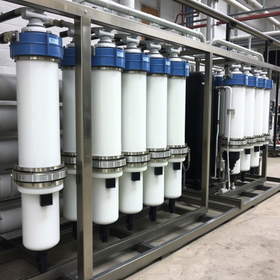
The RO system is a single system that includes not only the membrane but also pumps, instruments, and cleaning equipment. This explains the configuration of the system and the key points to focus on during daily operation.
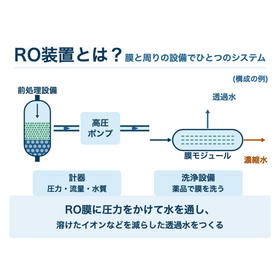
An RO system (reverse osmosis membrane system) is a device that applies pressure to an RO membrane to allow water to pass through, producing permeate water with reduced dissolved ions and other impurities. While the membrane is the main component, it is essential to combine it with surrounding equipment and manage daily operations to fully utilize its performance and ensure long-term use.
■ What is an RO system made of?
1. Pre-treatment equipment: Removes turbidity and residual chlorine before water enters the membrane.
2. High-pressure pump: Applies pressure to the water supplied to the membrane.
3. Membrane module: Contains spiral-shaped elements loaded into a pressure vessel.
4. Instruments: Measure pressure, flow rate, water quality, etc.
5. Cleaning equipment: Tanks, pumps, and filters used to wash the membrane with chemicals.
■ Why are pressure vessels arranged in two stages?
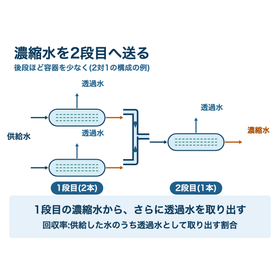
There is a limit to the amount of permeate water that can be extracted per element. Therefore, when aiming to increase recovery rates, the concentrated water from the first stage is sent to the second stage to extract additional permeate water.
■ Fewer vessels in the later stages
As the permeate water is extracted and the flow rate decreases, it is common to reduce the number of vessels in the later stages, arranging them in ratios such as 2 to 1. Please feel free to consult us first.